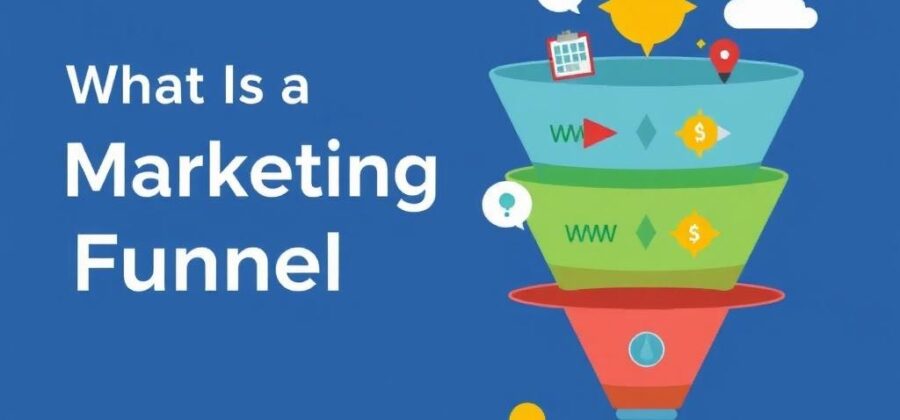
Marketing funnels turn messy interest into predictable outcomes by mapping how people move from first hearing about a product to becoming repeat customers. This article breaks down what a funnel really is, how to measure each stage, and the practical steps you can take to squeeze more value from every visitor or lead. Read on for frameworks, metrics, testing ideas, and hands-on tactics you can apply whether you run a startup, an online store, or a global marketing program.
Marketing funnel defined
A marketing funnel is a structured way to visualize and manage the stages a prospect passes through before becoming a customer. Think of it as a series of gates: each gate filters a portion of the audience based on intent, relevance, or readiness to buy. Funnels help teams assign the right content and tactics to the right people at the right time instead of blasting everyone with the same message.
At its simplest, the funnel is a conversion roadmap. It shows where people are lost, where acquisition costs spike, and where small improvements yield large returns. By translating broad marketing activity into stage-by-stage metrics, a funnel makes optimization methodical instead of guesswork.
Core stages of the funnel
Awareness
Awareness is the widest part of the funnel where people first learn about your brand, product, or solution. Channels that drive awareness include SEO, social media, PR, paid advertising, and content marketing. The goal at this stage is visibility and initial engagement—not a sale.
Metrics to watch include impressions, reach, organic traffic, and click-through rates. Qualitative signals such as branded search growth and direct traffic trends are also valuable because they indicate a rising baseline of recognition.
Interest and consideration
Once someone knows your brand, they enter the interest stage and begin to evaluate whether your offering is relevant. This is where informative content, product pages, webinars, and reviews play an outsized role. Prospects are comparison shopping and collecting information at this stage.
Engagement metrics matter here: time on page, content downloads, email opt-ins, and webinar attendance reveal intent. Tracking which content paths lead to higher conversion allows you to prioritize topics and formats that push people deeper into the funnel.
Intent and evaluation
Intent signals appear when prospects actively prepare to buy: they add items to cart, request demos, or repeatedly visit pricing pages. The evaluation phase is a negotiation of trust, value, and differentiation. Sales conversations, case studies, trials, and detailed comparisons help move prospects forward.
Measure intent with actions like demo requests, trial starts, product page revisits, and saved carts. At this stage the funnel narrows quickly, so small improvements in messaging or friction reduction can significantly boost conversions.
Purchase (conversion)
The purchase stage is where intent converts into revenue. A transparent checkout process, clear pricing, and minimal friction are essential here. The experience should be optimized to remove doubt and make the final steps straightforward and secure.
Conversion rate, average order value, cart abandonment rate, and cost per acquisition are primary metrics to track. Post-purchase analytics, such as time to first value and early usage, help inform retention work that follows.
Retention and advocacy
After the sale, the funnel isn’t over. Retention focuses on keeping customers engaged and reducing churn, while advocacy turns satisfied customers into promoters who refer others. Effective onboarding, support, and value-add communications are crucial at this stage.
Track retention rates, churn, repeat purchase frequency, and Net Promoter Score (NPS). Referrals and user-generated content are high-leverage outcomes because they feed back into the awareness stage at low incremental cost.
Common funnel models and when to use them
Marketers use several standard funnel models, each useful in different contexts. AIDA (Awareness, Interest, Desire, Action) is classic and works well for simple buyer journeys. The TOFU–MOFU–BOFU model (Top/Middle/Bottom of Funnel) maps content types to stages and is popular for content strategy alignment.
Other models tailor to channel or business type: SaaS often focuses on free trial funnels, e-commerce on checkout funnels, and B2B demand gen on lead-to-opportunity funnels. Choosing the right model depends on business objectives, sales cycle length, and the dominant conversion moments in your customer journey.
| Funnel type | Best for | Primary metric |
|---|---|---|
| AIDA | Simple product launches, broad consumer messaging | Conversion rate |
| TOFU–MOFU–BOFU | Content-driven inbound strategies | Lead quality and lead-to-customer rate |
| Free trial funnel | SaaS and subscription products | Trial-to-paid conversion |
| Checkout funnel | E-commerce | Cart abandonment and AOV |
Key metrics to track at each stage
Metrics are the language of funnel optimization. Without measurement, you cannot prioritize or validate changes. Different stages require different KPIs, and aligning analytics to the funnel prevents teams from optimizing the wrong thing.
Below is a compact list that maps common metrics to funnel stages. Use these as the backbone of your dashboard and ensure every marketing or product change is tied back to one of these metrics.
| Stage | Primary metrics |
|---|---|
| Awareness | Impressions, Reach, Organic traffic, Branded search volume |
| Interest | Time on page, Content downloads, Email opt-ins, Social engagement |
| Intent | Demo requests, Free trial starts, Product page revisits, Saved carts |
| Purchase | Conversion rate, AOV, Cart abandonment, CAC |
| Retention | Churn rate, Repeat purchase rate, Customer lifetime value (CLV) |
| Advocacy | NPS, Referral rate, User-generated content |
How to map and audit your funnel
Start with a map that combines behavior (what users do) and the marketing touchpoints that drive those behaviors. Plot pages, campaigns, emails, and sales interactions against the funnel stages and note the primary conversion action for each step. This creates clarity about where responsibility lies and which teams own which metrics.
An audit is the next step: pull data for each conversion step and compute funnel drop-off percentages. Identify which stages have the largest leaks and where acquisition costs are highest. Prioritize fixes where a small improvement will multiply downstream results.
Tools that help with mapping and auditing include Google Analytics or GA4, a CRM like HubSpot or Salesforce, product analytics such as Mixpanel or Amplitude, and session recording tools like Hotjar. Stitching these sources together provides both quantitative data and qualitative context for decision-making.
Optimization tactics by stage
Optimizing awareness
To expand the top of the funnel, focus on targeted visibility rather than raw reach. Improve SEO by answering specific search intents, produce shareable content, and use audience segmentation in paid channels to drive higher-quality traffic. Branded creative tested across multiple formats increases memorability and supports later-stage recognition.
Track not just raw traffic but the quality of traffic arriving from different channels. Look for signals like returning visitor rate and content consumption depth to determine which awareness tactics attract prospects likely to progress to interest and intent.
Optimizing interest and consideration
At the consideration stage, nurture through relevance. Use email sequences that align with the content a prospect consumed, serve dynamic site content based on referral source, and provide mid-funnel assets such as case studies and comparison guides. Personalization that feels human—referencing use cases, industry examples, or company size—raises relevance quickly.
Lead scoring can help prioritize high-potential contacts for sales outreach, and progressive profiling reduces form friction while building enough data for segmentation. The right content at this stage should answer the “why choose us” question convincingly.
Optimizing intent and evaluation
Intent signals are gold. When someone requests a demo, starts a trial, or returns multiple times, act quickly and with precision. Use live chat, automated qualification flows, and on-demand demos to speed time-to-value. For higher-ticket sales, provide tailored proposals and ROI-focused collateral.
Reduce friction by offering self-service options alongside human help—clear product tours, transparent pricing with calculators, and short buying paths. Fast, relevant responses at this stage close deals and reduce second-guessing.
Optimizing conversion
Conversion optimization is where small changes pay big dividends. Run structured A/B tests on headlines, CTAs, layout, and form length. Ensure your checkout or signup flow minimizes steps, supports multiple payment and authentication options, and communicates security and guarantees clearly.
Technical performance matters: page speed and mobile responsiveness correlate directly with conversion rates. Use heatmaps and funnel analytics to identify specific drop-off points and iterate quickly on fixes that remove friction.
Optimizing retention and advocacy
Retention is often the most overlooked lever for growth. Prioritize excellent onboarding that delivers first value quickly, and use behavioral emails to re-engage users before they churn. Product improvements informed by user feedback increase stickiness, while loyalty programs and referral incentives convert satisfied customers into advocates.
Measure the long-term impact of retention work by modeling changes to LTV and how they affect CAC payback. When retention improves, acquisition budgets can be redeployed to scale growth with better unit economics.
Segmentation and personalization strategies
Segmentation is the bridge between funnel stages and relevant messaging. Slice your audience by behavior (pages visited, actions taken), firmographics (company size, industry), demographics, and channel source. Each segment deserves a tailored pathway through the funnel with distinct content and offers.
Personalization can be simple and effective: use UTM tags and referral data to present contextual messaging on landing pages, or serve different hero copy based on industry. For deeper personalization, combine CRM data with on-site signals to modify offers, trial length, or onboarding flows on the fly. The aim is to reduce perceived risk and increase perceived relevance as prospects move through the funnel.
Content strategy tied to the funnel
Content should be designed to move people one stage at a time rather than trying to achieve everything at once. Top-of-funnel content educates and entertains; middle-of-funnel content answers objections and proves credibility; bottom-of-funnel content removes final barriers to purchase. Map specific content pieces to common objections at each stage.
A practical content matrix helps: match formats (blog posts, whitepapers, product demos, case studies) to stages, assign owners, and set measurable goals for each asset. Repurpose high-performing content across channels to amplify reach without creating new assets from scratch.
Testing and experimentation playbook
Disciplined testing requires a hypothesis, a clear metric, and a plan for significance. Start with changes expected to yield the biggest lift for the least effort—headline swaps, CTA copy, or form field reductions—and move toward more complex experiments over time. Keep your tests isolated so you can attribute results confidently.
Use A/B testing for discrete changes and multivariate testing for layout or content mixes that involve multiple elements. For longer customer journeys, consider cohort experiments or holdout groups to measure the impact of lifecycle messaging. Document tests, learnings, and roll-out criteria so that knowledge accumulates rather than being lost between campaigns.
Analytics setup and attribution
Accurate analytics are essential for funnel optimization. Configure event tracking for key actions, ensure consistent naming conventions, and forward analytical events into your CRM so marketing and sales share a single source of truth. Without reliable data, optimization becomes opinionated rather than evidence-based.
Attribution is tricky but necessary. Use a blended approach: simple first-touch and last-touch models for quick insights, and algorithmic or multi-touch attribution for deeper understanding of channel interactions. Even imperfect attribution clarifies which channels assist conversions versus directly converting.
Conversion rate optimization (CRO) techniques
CRO blends UX, copywriting, and behavioral psychology to move more people through each funnel step. Techniques that consistently work include simplifying forms, reducing cognitive load on pages, emphasizing social proof, and using scarcity or urgency sparingly and honestly. Microcopy—small bits of interface text—often reduces anxiety and increases completion rates.
Run usability tests, listen to session replays, and watch real users navigate critical flows. These qualitative findings frequently expose non-obvious friction that numeric funnels cannot reveal. Addressing those pain points often creates the fastest path to improved conversion.
Retargeting and paid funnel strategies
Paid channels excel at feeding the top of the funnel, but retargeting is where paid begins to capture value from users who already expressed interest. Build retargeting segments based on behavior: cart abandoners, product page viewers, or engaged content readers. Tailor creatives to their last interaction to increase relevance.
For budgets to scale efficiently, optimize toward value-based outcomes like purchase events, trial starts, or high-quality leads rather than clicks. Use lookalike audiences to expand reach while preserving the signal of existing high-value customers.
Tools and tech stack for funnel optimization
A lean tech stack for funnel work includes analytics (Google Analytics or GA4), product analytics (Amplitude or Mixpanel), CRM (HubSpot, Salesforce), email and automation (Klaviyo, Mailchimp, or Customer.io), and experimentation platforms (Optimizely, VWO, or native testing in your CMS). Session replay and heatmap tools (Hotjar, FullStory) add qualitative context.
Choose tools that integrate easily so you can trace a lead from first touch through purchase and beyond. Integration reduces data silos, shortens feedback loops, and enables more precise personalization across channels.
Common pitfalls and how to avoid them
One common mistake is optimizing vanity metrics that don’t correlate with business outcomes—focusing on likes, raw visits, or impressions instead of engagement or conversion. Another is making simultaneous changes across many pages and campaigns, which clouds causality and wastes learning opportunities. Slow decision cycles and fear of experimentation also hamstring progress.
Avoid these issues by setting clear, stage-appropriate KPIs, running isolated tests, and committing to quick iterations. Build a culture where experiments are expected and documented, and where failed tests are treated as learning rather than embarrassment.
Real-life examples and my experience
In one SaaS optimization project I worked on, free-trial-to-paid conversion was hovering at 2.4 percent. We mapped the trial funnel, instrumented usage metrics, and discovered users dropped off before completing a key setup step. By adding an in-app checklist, an automated onboarding email series that referenced checklist progress, and in-app tips tied to user behavior, trial completion rose by 27 percent and trial-to-paid conversion climbed to 4.1 percent within three months.
For an e-commerce brand, cart abandonment was 68 percent. We simplified the checkout to a single page, removed optional account creation, and introduced a persistent progress indicator. We also implemented a targeted email series for abandoners within one hour and ran a short discount test. The combined efforts reduced abandonment to 52 percent and lifted monthly revenues substantially due to improved checkout completion and higher repeat purchases.
Putting it together: a 90-day optimization plan
Week 1–2: Map the funnel and instrument events across marketing, product, and sales. Establish baseline metrics for each stage and set three measurable goals to focus on. Create a prioritized backlog of issues based on potential impact and ease of implementation.
-
Week 3–4: Run quick-win tests for high-traffic pages—headline swaps, CTA experiments, and form simplifications. Begin one segmentation and personalization pilot.
-
Week 5–8: Implement mid-funnel improvements: lead scoring, nurture sequences, and demo/playbook enhancements. Start a retention experiment like onboarding flow changes or an early engagement campaign.
-
Week 9–12: Scale successful experiments, roll out technical fixes (speed, mobile adjustments), and establish ongoing A/B testing cadences. Model the financial impact of changes to quantify CAC and LTV improvements.
Scaling optimizations and building momentum
Once you have reliable wins, institutionalize the process. Create a central playbook of successful tests and build templates for landing pages, email flows, and personalization rules. Train teams on the metrics and the testing methodology so improvements become repeatable rather than accidental.
As results compound, re-evaluate acquisition budgets and channel mix. Better funnel performance improves unit economics, which lets you invest more aggressively in growth. Keep monitoring cohort behavior to ensure long-term effects remain positive and adjust when new patterns emerge.
Optimizing a funnel is an ongoing discipline, not a one-off project. With clear measurement, prioritized experiments, and cross-functional collaboration, you can transform scattered marketing activity into a predictable engine for acquisition, conversion, and retention. Start with mapping, focus on the biggest leaks, and iterate steadily—each small improvement builds momentum and pays dividends across the entire customer lifecycle.